

Trends of 2025 on eeNews Europe


Europe has wrapped up 2025 with a focus on the next iteration of its semiconductor CHIPs Act, emphasizing sovereignty, security, and sustainability for the region. Throughout the year, engineers in the region have shown interest in a wide range of topics, from AI to quantum, medical electronics to satellite communications networks, and the circular economy. The most popular articles on eeNews Europe this year have highlighted these areas of interest.
One significant discussion in July involved Ebon Upton, CEO and founder of Raspberry Pi, and Nick Russel of RAM Innovations, who talked about the challenges of ensuring a secure and sustainable electronics supply chain in Europe. They also touched on the impact of the war in Ukraine and provided details on the latest re-spin of the RP2350 microcontroller to support 5V operation in rugged industrial applications.
A more connected world for the Internet of Things (IoT) is emerging with the development of non-terrestrial networks (NTN). New satellite networks are being designed for narrowband-IoT, but testing remains a key challenge, as explored in NTN NB-IoT for a truly connected world.
Recycling of electronics is gaining importance for future-proofing designs. Contract manufacturers are exploring innovative ways to recycle equipment, leading to a more sustainable and cost-effective supply chain. Additionally, advancements in materials are making it easier to recover components from boards at the end of their useful life.
Reshoring has once again become a focal point due to protectionism in the form of tariffs and geopolitical factors, prompting organizations to consider manufacturing in the region to ensure a sovereign supply. However, the process of reshoring faces challenges, including the high cost of automation, availability of resources and skills, regulatory environment, and input material costs.
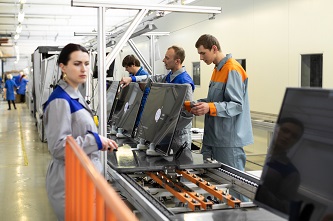
Smart factories are increasingly adopting robotics and automation software to create reconfigurable, fully automated facilities with minimal labor requirements. The cost of automation and robotics needs to decrease to make reshoring economically viable. The use of physical, analytical, and generative AI is expanding, enabling robots to perform tasks more efficiently.
Quantum technology is a key area of innovation for Europe, with the Quantum Act being prepared by the European Commission for mid-2026. The initiative aims to unify efforts, pool resources, and coordinate investments across member states to position Europe as a global leader in quantum innovation. The region is also making strides in medical electronics, with advancements in sensor technologies.
The Cyber Resilience Act (CRA) has come into effect to enhance the security of embedded systems, impacting the design process. AI continues to influence the semiconductor and electronics industry, with a focus on power consumption in data centers. The development of new architectures and processors is set to drive advancements in AI inference at the edge of the network, impacting the Internet of Things.
From security to quantum to AI, 2025 has underscored the importance of semiconductors across various industries. As we look ahead to 2026, these trends are expected to continue shaping the industry and driving innovation.






 Partner with us